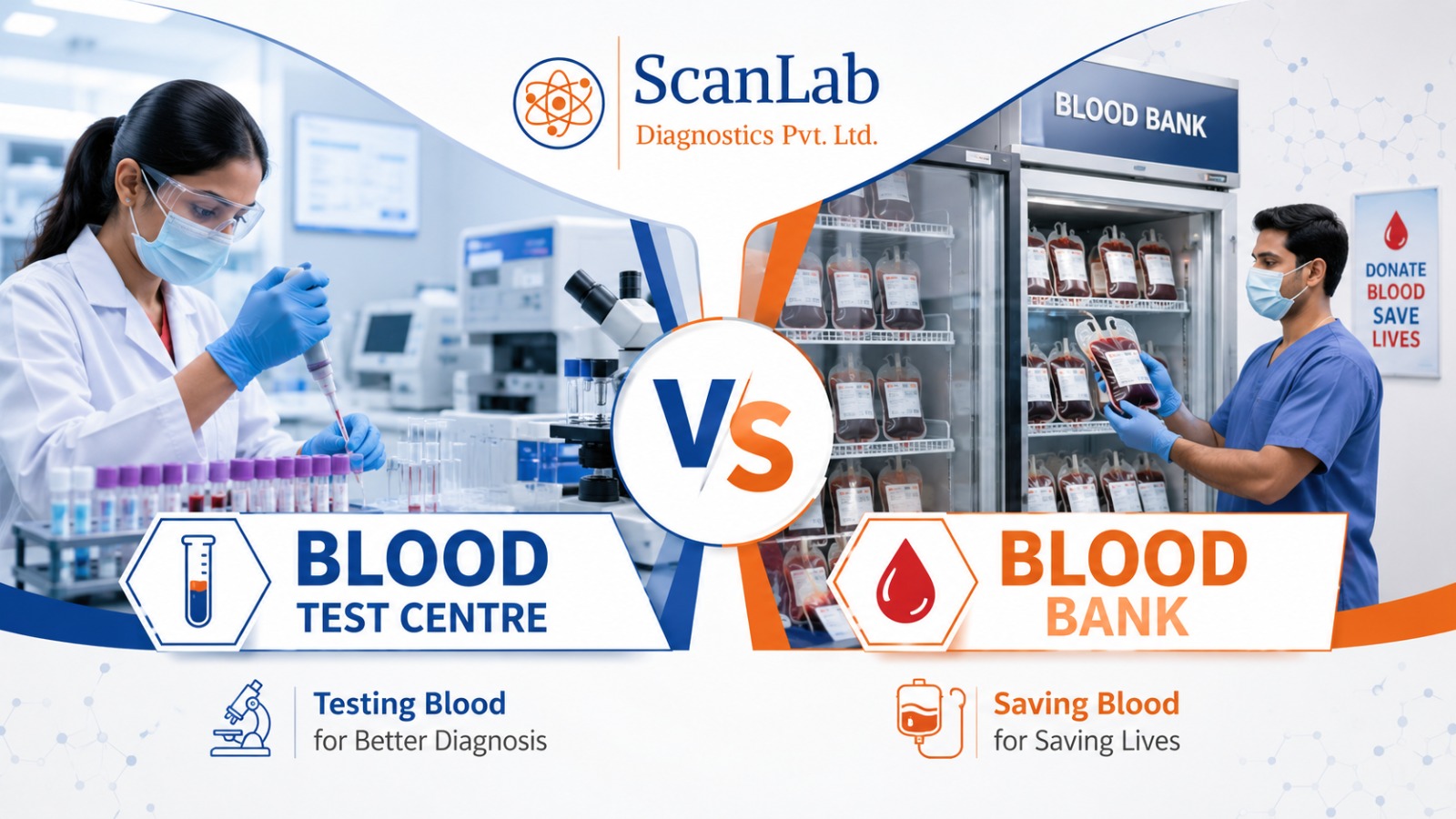
You've probably walked past both signs at some point, one board says "blood bank" another says "blood test centre" and for a second you wonder if they're basically doing the same thing. They're not. And getting the blood test centre and blood bank difference straight can save you an actual wasted trip to the wrong place. Quick version: a blood test center takes a sample from you and runs tests to tell you (and your doctor) what's going on inside your body. A blood bank works with donated blood; it screens it, stores it, and sends it to hospitals when someone needs a transfusion. Same word in both names. Completely different job
What Is a Blood Test Centre?
A blood test centre is basically a health check-up spot. Trained staff draw a small sample of your blood and send it off for testing. Depending on where you are, you might hear it called a blood testing laboratory, a blood testing centre or a diagnostic centre for blood tests. Different names, same job underneath.
Walk in, and here's roughly what happens: a phlebotomist, that's the person trained specifically to draw blood, takes a sample from a vein in your arm. Takes a couple of minutes, nothing dramatic. From there your sample goes to the lab, where technicians run the actual tests.

Once the report is ready, your doctor reads it to figure out what's happening inside your body. Could be your blood sugar. Could be cholesterol. Could be how your thyroid's behaving. Whatever it is, those numbers help your doctor track your health, or check if a treatment is actually working.
Common Tests Done at a Blood Test Centre
So what kind of tests show up most often? Depends on what your doctor's looking for, but a handful come up again and again:
- Complete Blood Count (CBC): Checks red blood cells, white blood cells and platelets.
- Blood Sugar Test: Measures glucose levels, useful for screening and monitoring diabetes.
- HbA1c: Gives your average blood sugar over the past two to three months.
- Lipid Profile: Measures cholesterol and triglyceride levels.
- Liver Function Test (LFT): Checks how well your liver's working
- Kidney Function Test (KFT): Checks how well your kidneys filter waste.
- Thyroid Tests: Measure hormone levels tied to your metabolism.
- Vitamin Tests: Check levels like Vitamin B12 or Vitamin D.
- Routine Blood Tests: The general panel run during annual check-ups.
Not sure which ones apply to you? That's literally what your doctor's there to figure out.
What Is a Blood Bank?
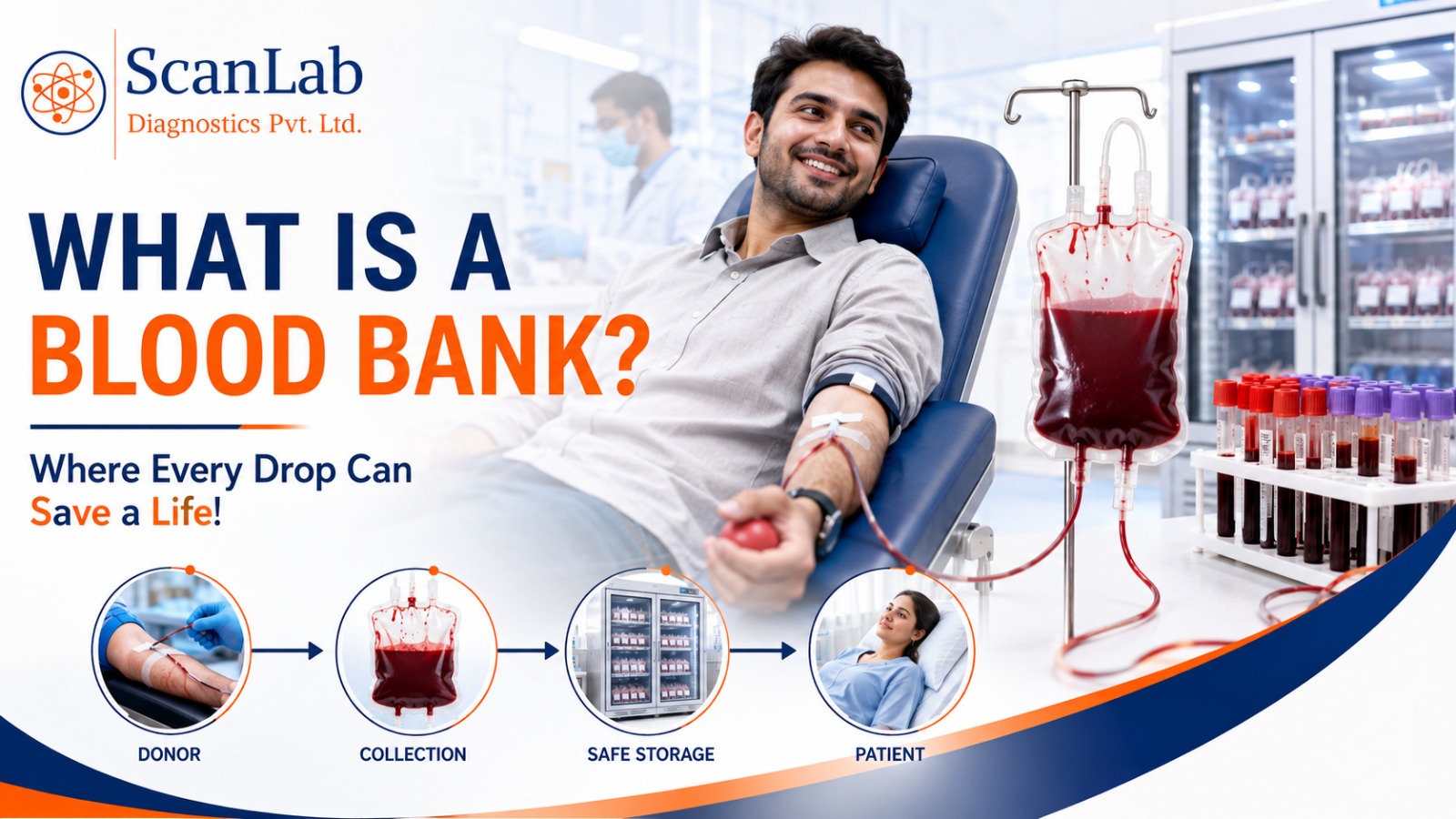
A blood bank's job looks nothing like this. It collects blood, tests it, stores it, and supplies blood components to patients who need a transfusion. There's no diagnosing involved here, it's purely about having safe blood ready the moment someone needs it.
Here's roughly how it works, stripped of the jargon:
- Donation: Healthy volunteers donate blood after an eligibility check.
- Screening: Every unit gets tested, infections like HIV, Hepatitis B and Hepatitis C, plus blood grouping, before anything's cleared for use
- Storage: Blood gets separated into red blood cells, plasma, and platelets, then stored under tightly controlled conditions until needed
- Components: Doctors rarely use whole blood. They use exactly the part a patient needs. Someone who's lost a lot of blood might need red cells. Someone with a clotting problem might need platelets instead.
Take blood banks out of the picture, and patients going through surgery, accident victims, people managing long-term conditions, none of them would have safe blood waiting when they need it most.
Blood Test Centre vs Blood Bank: What Is the Difference?
Let's line them up side by side:
| Feature | Blood Test Centre | Blood Bank |
|---|---|---|
| Main Purpose | Diagnose and monitor health through testing | Collect, store, and supply blood for transfusion |
| What They Handle | Patient blood samples for lab testing | Donated blood and blood components |
| Type of Testing | Diagnostic tests (CBC, sugar, thyroid, and more) | Donor screening and blood-safety testing |
| Blood Storage | Not typically applicable | Yes, under controlled, temperature-specific conditions |
| Patient Use | Health check-ups, symptom investigation, monitoring | Surgery, accidents, transfusion needs |
| Typical Services | Sample collection, lab testing, reporting | Donation drives, screening, storage, and supply |
When you strip it down, it's really about purpose. A blood test centre exists to help you and your doctor understand your health. A blood bank exists to make sure safe blood is sitting ready for whoever needs a transfusion.
They also treat blood very differently. Your sample at a test centre sticks around for a short while, just long enough to get processed into a report. A blood bank, on the other hand, holds donated blood for days or weeks, keeping it safe until someone calls for it.
Even the testing serves a different purpose. At a test centre, it's diagnostic: sugar levels, organ function, whatever's on your doctor's list. At a blood bank, it's about safety, making sure the blood's infection-free and actually compatible with the person receiving it.
Can a Blood Test Centre Provide Blood?
usually not. A blood test centre is set up to collect and test samples for diagnosis, that's it. Actual blood supply and transfusion services sit with licensed blood banks or blood centres.
This trips up more people than you'd think. Need a routine test? A blood test centre or diagnostic lab has you covered. Need blood for surgery or an emergency? That's squarely a hospital blood bank's territory, or an authorised blood bank facility. Since licensing and facility type can vary, it's still worth confirming with wherever you're headed.
Can a Blood Bank Do Blood Tests?
Sort of, yes, but not the kind of testing you'd get at a diagnostic lab. Blood banks test donated blood for infections, blood grouping, and compatibility, essentially, safety checks. The whole point is making sure the blood handed to a patient can't cause harm.
Diagnostic labs run a completely different show. They test patient samples for sugar levels, organ function, and a dozen other things depending on what's needed. So technically, yes, both "test blood." One's protecting safety before a transfusion. The other's helping you understand your day-to-day health.
Why Do You Need a Blood Test?
- A routine health check-up, even when you're feeling completely fine
- Investigating symptoms like fatigue or sudden weight change
- Monitoring diabetes or blood sugar levels
- Checking cholesterol for heart health
- Keeping tabs on thyroid function
- Checking vitamin levels, like B12 or D
- Tracking a condition you're already managing
- Whatever specific test your doctor recommends
People get blood tests for all kinds of reasons. A few that come up constantly:
Worth remembering, a blood test on its own doesn't diagnose anything. It's one piece of a bigger puzzle.
Paired with your symptoms and history, it gives your doctor a clearer picture.
When Do You Need a Blood Bank?
- Planned surgeries where blood loss is expected
- Accidents or trauma involving significant blood loss
- Severe blood loss, including some childbirth complications
- Treatments like chemotherapy that sometimes call for transfusion support
- Conditions like severe anaemia or blood disorders needing regular transfusions
Blood banks come into the picture when someone needs actual blood, not just a test result. Think along these lines:
In every one of these, it's the treating doctor who makes the call on whether a blood bank needs to step in.
How to Choose the Right Blood Testing Centre
If you are choosing a blood test centre, consider the following:
- Test availability: Does it run the exact test your doctor asked for?
- Proper sample collection: Are the staff actually trained and hygienic about it?
- Qualified professionals: Are there qualified technicians and pathologists on board?
- Hygiene and safety: Are proper protocols followed during collection?
- Reliable testing process: Is the equipment consistent and well-maintained?
- Timely reporting: Do reports actually arrive when promised?
- Convenient location: Easy enough to get to, especially for follow-ups?
- Digital reports: Can you pull up your reports online?
- Clear communication: Do the staff actually answer questions properly?
- Quality standards: Any relevant accreditation or certification, where applicable?
Blood Test Centre in Marketyard, Pune — ScanLab Diagnostics
If you're specifically hunting for a blood test centre in Marketyard, Pune, Scanlab Diagnostics Pvt. Ltd. is one of the diagnostic centres running blood testing and pathology services right in that area.
Scanlab keeps it fairly straightforward: sample collection, lab testing, and reporting, done properly whether it's a routine test or something more specific. Most visits follow the same rhythm, sample collected, sent off for testing, report back once it's ready.
Comparing a few diagnostic centres around Pune first? Worth checking test availability, turnaround time on reports, and how convenient the location actually is. Whichever centre you land on, confirm the exact test details beforehand, especially if your doctor's asked for something particular.
Frequently Asked Questions
A blood test centre checks your blood sample to tell you something about your health. A blood bank collects, screens, stores and supplies blood for transfusions.
No. A blood test centre is a diagnostic facility. A blood bank handles donation, storage and supply of blood.
Generally, no. Blood test centres are for diagnostic testing, not for supplying blood. For transfusion requirements, contact a hospital or licensed blood bank.
Common tests include CBC, blood sugar, HbA1c, lipid profile, liver and kidney function tests, thyroid tests and vitamin checks.
A blood bank collects blood from donors, screens it, stores it and supplies blood components for transfusion.
Yes. Donated blood is tested for infections and blood-group compatibility before it is approved for use.
A diagnostic laboratory or blood test centre can handle routine blood testing. Look for appropriate sample collection, reliable testing and timely reporting.
Sometimes, especially for specialised tests. When unsure, check with the diagnostic centre or your doctor.
Medical Information Disclaimer
This article is meant for general information only. It is not a substitute for professional medical advice, diagnosis or treatment. Blood test results should always be reviewed by a qualified doctor familiar with your health history. If you have specific health concerns, please talk to a qualified healthcare professional.